Persian Gulf monarchies, US hegemony, and the limits of Muslim solidarity with Iran
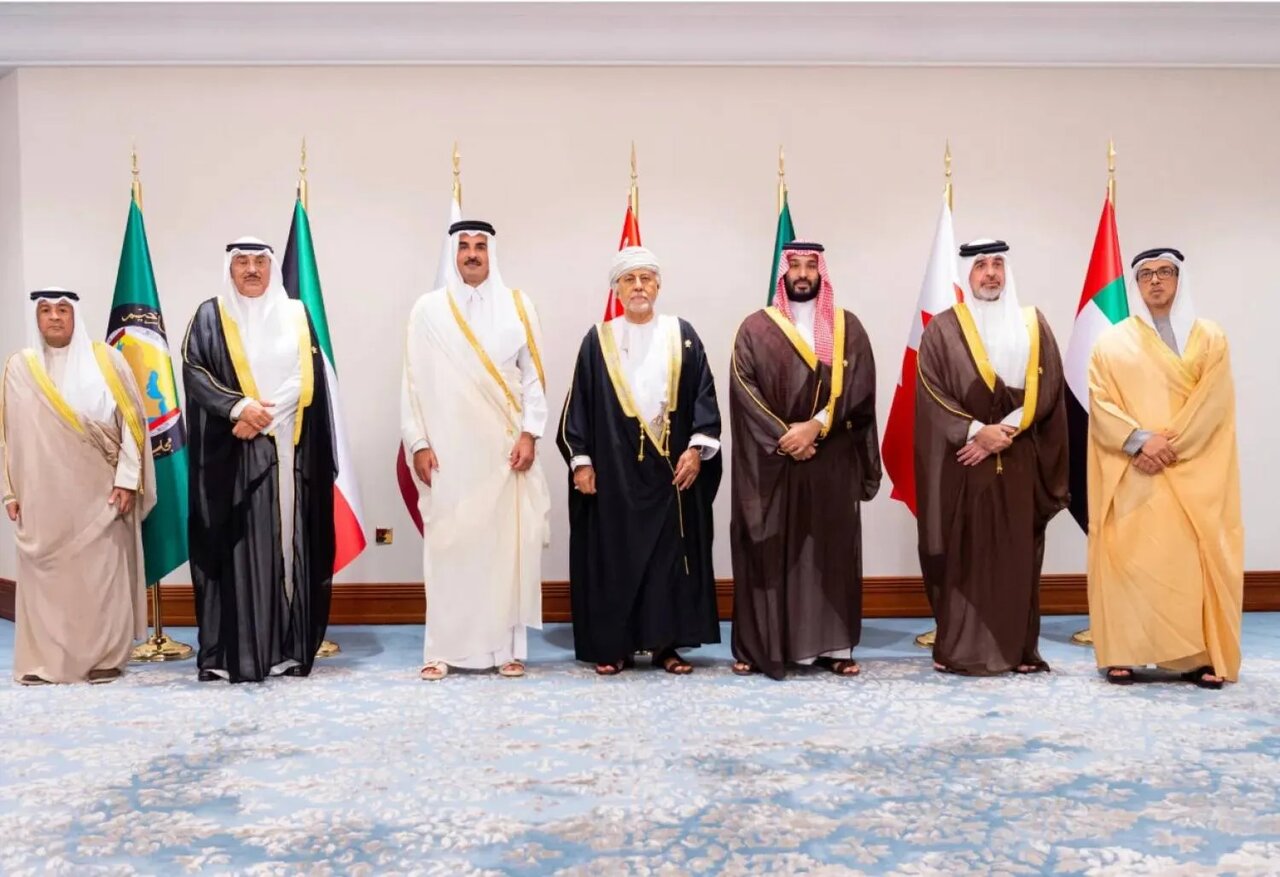
TEHRAN — The relationship between Iran and the Arab monarchies of the Persian Gulf has often been described through the familiar vocabulary of sectarian rivalry, strategic competition, and balance of power. Yet this vocabulary, although useful, is incomplete. It conceals a deeper contradiction: the persistent gap between the Islamic language publicly invoked by the Persian Gulf ruling elites and the security architecture through which they have tied their survival to the United States.
This contradiction is not primarily theological. Nor should it be reduced to an accusation against the peoples of the Persian Gulf. Ordinary Muslims in Saudi Arabia, Bahrain, Kuwait, Qatar, Oman, and the United Arab Emirates are not the architects of American hegemony in West Asia. Many of them share with Iranians a civilizational memory, a religious vocabulary, and a regional destiny that official alignments cannot erase. The problem lies at the level of state strategy: ruling elites that have repeatedly treated Islamic solidarity as symbolic capital while treating Washington as the ultimate guarantor of regime security.
For decades, the Persian Gulf monarchies have operated inside a bargain that is rarely stated honestly. The United States provides military protection, diplomatic cover, advanced weapons, financial integration, and strategic legitimacy. In return, Persian Gulf capitals accept a regional order in which American power remains the final arbiter of security. This has been presented as realism. But realism, when stripped of sovereignty and moral consistency, becomes dependency.
The American security system in the Persian Gulf is not an abstraction. It is institutional, military, and territorial. The United States has formal military bases in Kuwait, Bahrain, and Qatar, as well as access arrangements with other Persian Gulf monarchies, including the United Arab Emirates, Oman, and Saudi Arabia. For decades, these arrangements were sold as deterrence. Yet they also place Persian Gulf states within Washington’s strategic conflicts, including confrontations they cannot fully control or independently resolve.
This is the central paradox of Persian Gulf security. The more these states purchase protection from the external hegemon, the less autonomous their regional policy becomes. Their wealth buys weapons, but not sovereignty. Their alliances produce military infrastructure, but not strategic independence. Their leaders speak of stability, but their security model depends on the permanent presence of the very power whose interventions have repeatedly destabilized West Asia.
Iran, by contrast, represents a different political fact: a Muslim-majority state that has insisted, despite sanctions, pressure, assassinations, isolation, and military threats, that regional sovereignty cannot be rented from Washington. One does not need to agree with every Iranian policy to recognize the historical significance of this position. The Islamic Republic has become intolerable to the United States not simply because of its capabilities, but because it refused to accept the hierarchy of a U.S.-managed Middle East.
This is why the Persian Gulf position toward Iran is so morally revealing. Iran is not an alien civilization. It is not a Western colonial power. It is not an occupying army imported from outside the region. It is a Muslim neighbor, a central state of West Asia, and a civilization that has contributed for centuries to Islamic thought, science, culture, and political life. If the language of the Ummah has any political meaning, then disagreement with Iran should be managed through regional dialogue, not through alignment with an external hegemon.
The Saudi-Iranian rapprochement of March 2023 briefly showed that another regional order was possible. In the Beijing-brokered joint statement, Saudi Arabia and Iran agreed to resume diplomatic relations, reopen embassies, respect sovereignty, avoid interference in internal affairs, and pursue good-neighborly relations. That agreement was important not merely because it restored diplomatic channels, but because it challenged the assumption that Washington must be the indispensable manager of Persian Gulf security.
The importance of that moment should not be underestimated. It suggested that Muslim-majority states could manage their conflicts without American tutelage. It suggested that Saudi Arabia and Iran, despite deep disagreements, could speak the language of regional responsibility. It suggested that the Persian Gulf need not remain a militarized zone organized around the containment of Iran.
Yet the structural problem remains. The Persian Gulf monarchies continue to depend on a U.S.-centered security order that has historically framed Iran as a threat to be contained rather than a neighbor to be integrated into a stable regional system. This is where the contradiction becomes unavoidable. One cannot seriously speak of Islamic unity while accepting a strategic architecture designed to isolate and weaken one of the most important Muslim states in the region.
This does not mean that Iran and the Persian Gulf monarchies have no real disputes. They do. There are ideological differences, sectarian sensitivities, territorial questions, energy rivalries, and competing visions of regional leadership. But serious disagreement among neighbors is not the same as strategic subordination to an external power. The first is politics. The second is dependency.
The Persian Gulf monarchies often describe their foreign policy as pragmatic. But pragmatism becomes morally empty when it consistently benefits the hegemon at the expense of regional autonomy. It is one thing to pursue national interest. It is another to define national interest so narrowly that Muslim solidarity, regional independence, and resistance to external domination disappear whenever Washington offers security guarantees.
The deeper issue is not whether Persian Gulf rulers “believe” in Islam as a private faith. That is not the question. The question is whether Islamic political language has any consequence when material interests are at stake. If faith is invoked in domestic legitimacy, public ceremonies, and international symbolism, but abandoned when a Muslim neighbor is sanctioned, threatened, isolated, or encircled, then faith has been reduced to rhetoric. In that sense, the Persian Gulf crisis is not only geopolitical. It is a crisis of normative consistency.
The rentier-state structure intensifies this problem. Persian Gulf monarchies are not ordinary states. Their political economy is built around hydrocarbons, sovereign wealth, imported labor, external investment, and regime-centered distribution. Their ruling bargains depend heavily on stability, consumption, and international financial integration. This helps explain why many Persian Gulf elites prefer the American security umbrella: it protects not only borders, but ruling arrangements, wealth flows, and global prestige.
But what appears stable in the short term may be corrosive in the long term. A region cannot build durable security by outsourcing its political future to a power whose priorities are global, not Islamic; imperial, not regional; transactional, not fraternal. The United States does not protect the Persian Gulf because it loves the Persian Gulf. It protects access, markets, bases, energy routes, and strategic leverage. The moment Persian Gulf interests diverge from Washington’s interests, the asymmetry becomes clear.
Tehran Times has already captured this reality in its own recent analysis, arguing that Persian Gulf states can no longer assume the United States is a reliable security guarantor. This is an important point. The issue is not simply that America may abandon its partners. The issue is that America may involve them in conflicts that weaken their security while claiming to defend it.
For the Persian Gulf monarchies, the choice is therefore stark. They can continue to treat Iran primarily through the lens of American threat perception, or they can begin to develop a genuinely regional security framework. The first path preserves dependency. The second requires courage.
A sovereign Persian Gulf security order would rest on several principles: no foreign military infrastructure used against neighboring states; no participation in economic warfare against Muslim societies; no normalization of aggression under the language of stability; respect for sovereignty and non-interference; and a serious diplomatic mechanism among Iran, Iraq, Saudi Arabia, Oman, Qatar, Kuwait, Bahrain, and the United Arab Emirates.
Such an order would not require romantic illusions. Iran and its Arab neighbors would still disagree. But they would disagree as regional actors, not as clients and targets inside an American-designed system. They would negotiate as states with shared geography, shared risks, and shared civilizational responsibilities.
The Persian Gulf monarchies have built remarkable cities, airlines, ports, investment funds, and global brands. But history does not judge political orders only by their wealth. It also judges what that wealth served. Did it serve independence or dependency? Did it serve regional peace or external domination? Did it serve the dignity of the Ummah or the comfort of alignment with the empire?
This is the uncomfortable truth: some Persian Gulf ruling elites have subordinated Islamic solidarity and regional autonomy to the material guarantees of the American security order. They did not abandon faith in a doctrinal sense. They abandoned its political implications. They chose the safety of the hegemon over the risks of Muslim independence.
Iran does not need submission from its neighbors. It needs recognition of a simple reality: West Asia cannot be stabilized by excluding Iran, encircling Iran, or outsourcing the region’s security to the United States. A durable order must include Iran, respect Iran, and accept that the age of unilateral American management is ending.
The people of the Persian Gulf and the people of Iran deserve better than a future written in Washington. They deserve a regional order based on sovereignty, dialogue, dignity, and Islamic responsibility.
The Ummah was not meant to become a market for American weapons. It was not meant to finance its own fragmentation. And it was not meant to confuse dependency with security.
The Persian Gulf still has a choice. It can remain wealthy under the shadow of the hegemon, or it can become sovereign within its own region. Only one of those paths is compatible with dignity.
Leave a Comment